
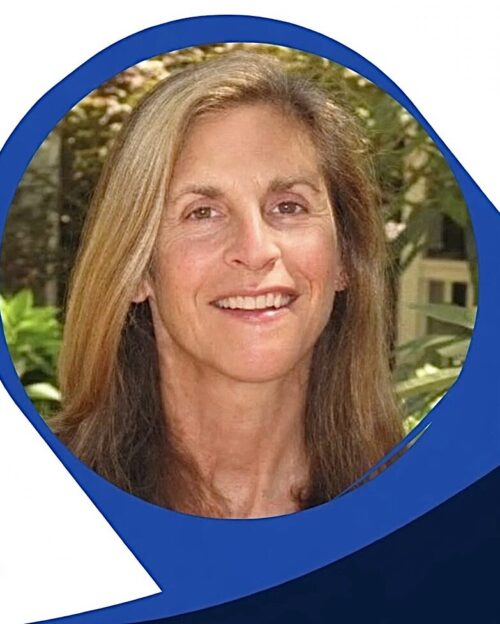
On October 29, 2026, shortly after the dawn light became clear in the misty sky, we too had the opportunity to illuminate, with exceptional scientific preparation, current perspectives regarding the difficulties in grasping diversity in its various forms, which often generate confused and dark thoughts. The clear and effective delivery of this synergistic exchange was made possible thanks to the translation by Dr. Giordano Pinnelli, which facilitated complex reflections into a language familiar to us.
The sense of belonging to a community that champions a change of direction gave us the impetus to open the doors of La Collina Storta and welcome Dr. Barbara Kalmanson, the speaker of the seminar “Understanding Difficult Behaviours, What They Mean, and How We React.” She is a professional with over 50 years of experience as a PhD, a clinical psychologist specialising in early development and relationships, and the founder of the DIRFloortime Oak Hill School in San Anselmo (USA), who is now a regular guest and supporter of our workshops.
On such an occasion of international calibre, we managed to cast our gaze overseas, allowing our minds to become flexible on the topic of autism, pushing past false beliefs and seeking to recognise the models we can use to understand the behaviour of a neurodivergent child, teenager, or adult, moving beyond the appearance of an exasperated cry or an aggressive punch. Behaviours should not be understood as they seem, that is, literally; it often happens that a person in difficulty experiences dysregulation reactions that are not the result of a conscious will to hurt. Consequently, as parents, family members, or teachers, we must investigate the cause of the expression, avoiding shutting it down prematurely with anger. If we instinctively ask ourselves, “Why is the child sobbing uncontrollably and kicking and slapping the very people who love them most?” putting ourselves in the caregiver’s shoes, one might mistakenly think “They don’t love me,” and fall into a state of profound despair.
To alleviate this, Kalmanson extends a hand and enables us to pause for a moment, catch our breath, breathe, and relearn how to communicate. This means not following the traditional canons of linear communication based on transmitting a message accompanied by the reception of immediate and coherent feedback, with the right amount of attention. We learn that to connect with a neurodivergent individual, it is necessary to propose a slow and gradual dialogue stimulation, which is often more appropriate and reassuring for those who cannot use rationality to realise whether they are facing a threat, having an interpretation of gravity that does not correspond to actual danger. Therefore, an individual’s level of tolerance will vary depending upon the intensity, number and duration of stressors.
“It is the definition of “autism spectrum” that clarifies the multiple nature of symptoms and socialisation skills, which in fact are not the same for all neurodivergent individuals; everyone reacts differently to the same situation or the same stimulus received from the surrounding environment.
Focusing on non-verbal language, rich in gestures, facial expressions, and movements, we know that it contributes to consolidating human relationships or hindering them. But a higher dose of affection, words, and touches is not always perceived positively by the recipient with autism; the risk is running into violent and incomprehensible responses caused by the resulting visual, auditory, olfactory, or tactile overstimulation. Therefore, before showing emotional interest, it would be preferable to re-modulate the meanings attributed to the concept of boundaries, not seeing a boundary as a barrier that prevents us from reaching the heart of those beside us but rather accepting it so that it leads us toward a space where we are together in the present using reciprocity. Thus, the give-and-receive binomial works if it is structured on “giving” up to the point where the other is able to keep up, listening to and interpreting their actions to regain balance, achieving in the encounter the value of two bodies and two souls seeking each other, tuning into the needs of both participants in the communicative act.
What do we take home from the seminar? Certainly, the awareness that to feel in the right place at the right time, saying the right phrases, takes time, essential for acquiring adequate skills, which are certainly not innate. Similar to planting seeds, which must be carefully cultivated before becoming strong shrubs resistant to inclement weather, to support psychological tension it is advisable to undertake therapeutic pathways aimed precisely at letting solid communicative strategies settle within us, fostering authentic bonds and managing conflict, whether between parent and child or between adults. These are initiatives that here at La Collina make up a large part of the work carried out daily with young people and families. Furthermore, to begin exploring in concrete terms the care prerogatives accessible in Italy, Kalmanson—as an honorary member—invites us to monitor the activities carried out by “DIRimè Italia APS” an association that brings together people with the dream of creating a culture of neurodiversity, proposing a multidisciplinary network of services, free inclusive projects, DIRFloortime training, and neurodevelopmental scientific dissemination.
Giulia Pernaselci, Member of the Italian National Order of Journalists (Publicist Register)
Clinical Contribution Based on the Experience of La Collina Storta
Reflections on the Margins of the Seminar with Barbara Kalmanson
What struck me most about the seminar is the possibility of accompanying, with time and patience, a person who experiences moments of emotional dysregulation and presents marked sensory particularities to recognise what is happening in their own body and find ways to communicate it. It made me reflect on how much the response of those next to them matters in this journey. When a sign of distress is recognised and welcomed, the person can experience other ways to express a need, ask for a break, or seek closeness.
In Kalmanson’s observations of the young people we follow at La Collina Storta, I grasped a possibility of the DIR model that directly concerns our work. Professionals from different disciplines, backgrounds, and contexts can compare what they observe and reconstruct what, in a given situation, caused the level of activation (or arousal) to rise. We can ask ourselves what happened beforehand, what signals we picked up, and what effect our way of intervening had. Even a repeated gesture or the insistent return to the same thought can become clues to explore. This step reduces the weight of a symptom-centred reading and helps us review those educational responses that, by dint of being applied in the same way, risk losing sight of the person.
I think of the circle time, the roll call, or the sequences we use to accompany certain autonomies. These routines provide predictability and offer opportunities for socialisation. However, a teenager may follow all the steps and, in the meantime, struggle greatly to sustain the noise, the waiting, or the proximity of others. Noticing this in time allows us to intervene preventively, for example by giving them more time to respond or making space for a break. In this way, participation in the group can also become an opportunity to recognise what one is feeling, give it space, and find a way to make it understandable to others. The group can also learn to recognise and welcome those signals.
This is where, for me, co-responsibility between family and team comes into play. A new way of expressing distress, experienced at La Collina, may struggle to find space at home, where other response modalities have consolidated over time. When the management of the most difficult situations is entrusted entirely to the team, we too risk entering, without realising it, into the same sequence of reactions that we would like to modify. Involving the family means building together an interpretation of what happens in different contexts, recognising the early signs of fatigue, and agreeing on responses that everyone can sustain in daily life.
Dr. Sara Sciabordi – Clinical psychologist, specialised in ADHD, SLD (Specific Learning Disabilities), and Mindfulness. Coordinator of the Autism Academy at “La Collina Storta” by Tutti giù per terra Onlus.